Showing posts with label reshmi. Show all posts

Monday, 13 April 2015

Heat Exchangers in HVAC Air Coils

Most machines or devices today use heat exchangers in a way or another. These devices utilise heat exchangers in their processes since it replenishes the machines especially those that are used continuously. Without heat exchanger, machines may not lasts as long as they should perform to the capacity that they could.

HVAC Air Coils

This may be one of the most common machines in the world today that uses heat exchangers. In buildings or vehicles, heat exchangers are usually called air coils, or just coils, when used in these settings. The shape of their internal tubing makes the coils a perfect heat exchanger for air conditioners, of all sizes. Cross flow defines a HVAC coils. This cross flow arrangements enables heat to transfer from air to liquid and vice versa in the process. In motor vehicles, air coils also goes by the name of heater cores.

http://www.heatecholdings.com/


In the process of exchanging heat, HVAC coils usually use water and other fluids such as water-glycol solutions, steam or any other refrigerating compound.

Two Sides: Liquid and Air Heat Exchange

The coils for liquid exchange are composed of two sides: the heating coil and cooling coil. In heating coils, a boiler usually does the job of the heat transfer. It uses heated fluid generated by the boiler to heat up the air that passes through it.

For cooling coils on the other hand, chillers do the heat-transferring job. Refrigerants and chilled water are the usual mediums used in the air-cooling process. They mingle with the air generated to provide cooling and heat exchange in the process.

The set-up normally goes like this. The chilled water that is supplied in the HVACs are supplied by chillers separated from the machine itself whilst the refrigerant used can usually be found in condensing units that are located near the HVAC. When refrigerants are being used in the process, they usually serve the purpose of an evaporator in the cycle of vapor-compression refrigeration.

On the other hand, the airside of the heat exchange process in HVAC coils is very different from the liquid side of the process. Psychrometrics is the process that produces air with moisture. Heating the air inside the air coils enables it to hold more water. This makes the job of the heating coil a whole lot easier.

But cooling coils on the hand have to be more up to par with the added work since they will be the part that would be handling the heating process more. Cooling coils must be designed in such a way that it will be able to process the added moisture on the air together with their usual cooling process.

Wide Use of HVAC Coils

Too many industries now use HVAC air coils on their everyday operations. They are subtle but very important parts. Developers continue to come up with new ways that would improve heat exchangers and air conditioning processes in machines today.

Wednesday, 1 April 2015

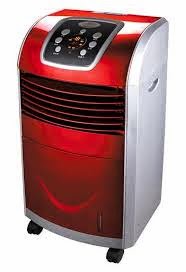
Portable air cooler information

1. Considering a portable air cooler can be utilized exclusively within places that are very hot and also dry, they're less effective around areas that have a humid climate. Humid weather carries a adverse effect within the working of these coolers as water won't evaporate rapidly and ample cool air isn't produced.
In addition, these kinds of units need a consistent supply of fresh water that might be a issue within a dry region.
2. Portable air cooler, often known as Swamp coolers are practical units for those who seeking to cool their own households. They are perfect around areas where the weather conditions will be warm and also dry. They're the ideal selection for those who are looking to cool their particular house devoid of paying a lot of money.

http://www.heatecholdings.com/

3. In contrast to air conditioners, evaporative air coolers need regular care and attention of homeowners. Because they will work on the theory connected with evaporation, whenever water evaporates salts and also minerals within the water will be left behind within the pads. If you don't wash your pads, they may go hard and may soak up a lesser amount of dampness.
Many more modern designs feature a timer which eliminates your salt water after aspecific quantity of given hours. Considering that salt water will be removed from the device, you don't need to endure the problem involving washing your pads.
4. A large number of home owners favor employing evaporative air coolers simply because they don't possess a detrimental impact on the particular environment. Air conditioners tend to be acknowledged to generate gases that could badly impact the ecosystem. Considering that, swamp coolers use the rules connected with evaporation they don't harm our environment.
5. Lightweight air coolers are usually preferred over air conditioners simply because they consume a smaller amount energy. Usually when you use evaporative coolers it is possible to lessen your energy intake by in excess of 33 per cent.
Nonetheless, for you to manage these types of coolers you might need a lot of water. In areas where the particular mineral content inside the water is actually high, you will require additional water in order to get rid of the particular minerals from the device.
6. Nowadays, there are numerous companies that produce transportable portable air coolers depending on the requirements of the clients. The form of the unit can vary subject to areas you intend to cool plus the space available. By way of example, if you would like cool a smallish room, you can find the 10-inch personal easily transportable air cooler.
These types of devices may be used inside your house or maybe workplace and can cool a space of approximately 800 square feet. Whenever investing in a device, be sure to access the amount of functional operation necessary. Selling prices in the unit using limited functions is generally reduced when compared to a unit that has a number of functions.
7. During summers many home owners are usually thinking of buying products that assist in maintaining their property cool. They are looking to buy solutions which are efficient in keeping the house cool with out increasing their particular energy expenditures. A lot of people are usually steering clear of the application of air-conditioners because they are generally high priced and ungainly.
Additionally, the particular operating cost connected with air-conditioners can be higher which will increase your energy expenses. To deal with the particular issue connected with substantial energy costs, many individuals are generally thinking about purchasing methods which are as powerful as air-conditioners but are energy-efficient like the portable air cooler.

What Is The Purpose of a Heat Exchanger?


A heat exchanger is a device that transfers heat from one place to another, in order to create a cooling action. It is used in a variety of situations, where heat transfer is required, such as in chemical plants, natural gas processing, and sewage treatment plants. It is also used in everyday machines and appliances, such as refrigerators and air conditioners. To gain a better understanding of the purpose of a heat exchanger, let's take a look how it works and what it is used for.

How does a heat exchanger work?
A heat exchanger works by transferring heat from one fluid (gas or liquid) to another, through the use of metal pipes and plates. Hot fluid flows from one side of a heat exchanger's metal partition, to the other side of the heat exchanger's partition, resulting in a reduction of temperature.

http://www.heatecholdings.com/


What is a heat exchanger made of?
 
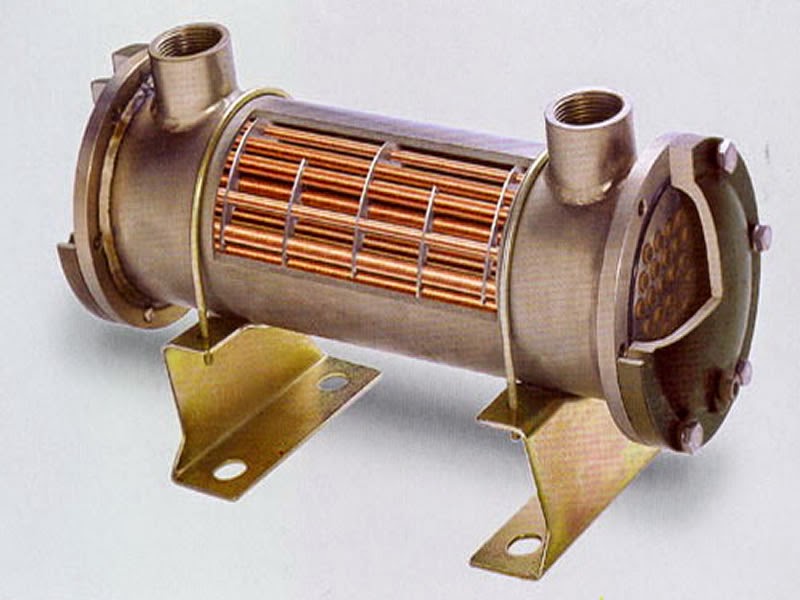
Heat exchangers are made in a variety of ways, for a variety of purposes, and in a variety of different sizes. Most commonly, a heat exchanger consists of coiled metal piping and metal plates. The coiled metal pipes contain fluid, which passes through a chamber containing another fluid, which cools down the fluid temperature. The most common material used for heat exchanger plates is stainless steel, due to its resistance to corrosion, strength, and ability to withstand high temperatures. However, other metals such as copper, bronze, steel, aluminum and cast iron are sometimes used instead. The heat exchanger plates are spaced by sealing gaskets made from rubber, which are cemented into sections around the edge of the plates, which ensure the fluids do not touch or mix together. The combination of all these parts working together is what creates the cooling action on fluid.


What are heat exchangers used for?

Heat exchangers are used in many machines and household appliances. Refrigerators and air conditions, for example, are common appliances that have heat exchangers built within them. A car radiator is also a heat exchanger. With a car radiator the exchanger transfers heat generated in the engine to the outside air, which keeps the engine cooled, preventing it from overheating. Heat exchangers are also used for transferring toxic substances, such as ethylene glycol (antifreeze).


http://www.heatecholdings.com/


There are different kinds of heat exchanger systems, depending on the machine or appliance they are intended to be used for. Plate heat exchangers are the most common. IF you wish to research more, look up Alfa Laval heat exchanger models: Sondex, Tranter, Swep, APV, GEA, and Serck.

One thing to note about heat exchangers is the importance of having them regularly checked. A cracked heat exchanger will leak carbon monoxide, which is poisonous to humans. Carbon monoxide is a gas; it has no scent, and cannot be seen or tasted. Undetected carbon monoxide can kill humans in as little as 10 minutes, and faulty heat exchangers are responsible for hundreds of deaths every year. In order to reduce the risk, have regular checkups on your appliances, and make sure each room of a building is fitted with a carbon monoxide detector.